Metaphysical Freedom

Psychotherapy/Counseling, Metaphysical Coaching (Life and Business), Counselor Consultation and Supervision, Mindfulness-Based Energy Work


Leave a comment

Dealing with the Loss of a Parent (and you’re under 35)

Grief and loss are challenging things to face, and they affect everyone. The impact of loss varies based on someone’s perception and experience. Grief can be felt from losing a valued item, going through a breakup, or facing the transition (death) of a loved one. Grief, simply defined, is a feeling of deep sorrow.

Five and a half years ago, I had a vision of my dad dying. I couldn’t fight the choking feeling in my throat, the sadness, and the fear. I called him sobbing and told him about my vision. My dad knew that I was very intuitive, so he was not surprised at all about my vision, nor was he surprised to hear me being so upset.

Calling him opened up a dialogue that I believe every parent and child would like to have before one transitions. My dad spoke very calmly and said, “You’re picking up on a lot of death around me. A lot of people I know have died. I’ve been feeling sad about it, so you feel that too. If I were to die today, I would be content. I’m very happy with my life. I have wonderful grandchildren. I’m proud of my children. I’m proud of you. All of my daughters have degrees! If I died today, I’ve lived a good life.”

Of course, this was comforting, but at that time, it was upsetting too. Hearing my dad say those words let me know that he was ready to transition whenever it was time. He was in his late 60’s, which is still young to me, but I knew deep down that I had to find peace with his perspective. He lived through many historic and painful events and was able to see the positives despite them.

Secretly, I think my dad knew I was concerned about our time together. I was working towards an independent counselor license and working two part-time jobs, so my trips back to my hometown were limited. My dad began calling me every morning around 7:00am and we talked during my 45-minute commute to work. The conversations were priceless. At the end of every call, he wished me a blessed day and told me he loved me. This went on for quite some time.

Two years later, I went to Ghana, West Africa for a month and returned home, ready to share about my experiences. During summertime, I went back to my hometown and spent time with family. I shared with my dad about my trip. He told me he was proud of me and glad that I went to Ghana. By that time, our calls were not as frequent, but they were still quite rich. During my visit, my dad also shared with me that he liked what I was doing with my Metaphysical work, and he showed me some metaphysical and spiritual books he was reading.

Months later, things changed.

Everywhere I went, I kept seeing butterflies. I LOVE butterflies and usually feel excited when I see them, but during that time, I had an eerie feeling. The butterflies were giving me a message that I wasn’t ready to receive.

The more I tried to ignore them, the more they got my attention. I’ll never forget three distinct times I saw them.

  1. I remember going to a coffee shop and facing the window while I worked. I looked up and saw about 30 butterflies flying by like a flock of birds. It gave me chills, but I shook it off.
  2. I was driving on the highway and looked at my side view mirror. There was a butterfly flying in sync and very close to the mirror. The butterfly did not fly away when I stopped at my destination, but it lingered by the window. I shook the weirdness off again.
  3. I was walking to a parade with a friend. It was crowded, so I had to walk behind her since she knew the way. In the midst of all the people and flowers, a butterfly flew down and landed on her back (which was right in front of me). In that moment, I had a strong, eerie feeling.

The day before that parade was September 11th, my dad’s birthday. I called him to let him know I would come see him and celebrate his birthday the weekend after because of training and a dance performance during his birthday weekend. I didn’t get an answer, so I left a message for him.

Well, that night of the parade, I got the call. My dad had transitioned.

Looking back, I can equate my response that night as being in shock. I didn’t cry or rush home. I stayed calm and tried to be supportive to my family members. The next day, I cried some, but I still did the dance performance because my dad loved to dance. I only told two people about his death, and I went to my hometown afterwards.

Planning a funeral took “adulting” to the next level. There I was, under 35, with my mother and siblings discussing caskets, headstones, obituaries, funeral service times, and the burial site. My mind kept flipping between thoughts that the next ceremony we planned should have been a wedding or a bridal shower at least, not a funeral.

The first few years after his death, I worked like there was no tomorrow. I had a full-time job, did public speaking engagements, and was on different committees and organizations within my spiritual community. The experiences were amazing, but emotionally I was distracting myself.

Finally, two years after his death, I gave myself full permission to let go and grieve.

I recognized my disappointment that my dad would not be physically present to see me get married. I was not happy with not being able to talk to him on the phone anymore. I was haunted when I went home and drove by the house we grew up in, knowing he wasn’t in there. I was angry that he didn’t live at least until I was 40 or older. Realistically, all of these feelings are normal.

Grief is not a linear process. I tell this to my clients and I know it to be true. Elisabeth Kubler Ross was a psychiatrist who came up with the Five Stages of Grief. They are Denial, Anger, Bargaining, Depression, and Acceptance. Although these stages were initially identified to address the process that someone goes through when facing death, it also applies to the surviving loved ones as well.

As a “Millennial” who is already dealing with many normal life challenges, I was not expecting to deal with my father’s death so soon. As a therapist, I know that the reason many people feel sadness when someone dies (or goes away) is because the person’s physical presence is absent. We no longer see the person, hear the person’s voice (in real time), experience the person’s touch, etc. As a Metaphysician, I have learned to transmute this experience into an empowering one. I know that energy is never lost; it only changes form. I know I can access the energy of my dad through the metaphysical skills I have learned over the years, and it is comforting to me.

If you are dealing with the loss of a parent, allow yourself to go through the process and know that some days are easier than others. Don’t be afraid to seek support when needed.

When you think of the transitioned parent, consider these three things:

  1. What positive messages did you get from your parent?

For example, my dad told me he was proud of me, proud of the work that I do, and he likes my Metaphysical work. He also shared that he felt like I understood him.

  1. What characteristics or positive traits did you inherit or learn from your parent?

My experience with my dad helped me to see that it is okay to be quirky and free-spirited. My dad traveled when he felt like it, danced up into his 70’s, and he was artistic (drawing, photography, played guitar). I’m not afraid to ask questions. I dance, enjoy being creative, and follow my flow.

  1. Remember, your parent is always with you.

You are a living, breathing expression of your parents. Their presence is in your DNA. Even if it is a step-parent or if you are adopted, their energy is still with you because it has shaped or influenced you.

Energy is never lost; therefore, you are never alone.

With love and light,

Dana
http://www.MetaphysicalFreedom.com


Leave a comment

Who Do You Trust?

“I trust you”

I believe that these three words can have more weight than “I love you”. For instance, I love people in general and I love my cat. Based on a previous definition I gave of love (Love…Anyone?), it is impersonal but also delightful.

Trust, on the other hand, is very personal. Merriam-Webster’s Dictionary defines trust as “assured reliance on the character, ability, strength, or truth of someone or something.” Sounds quite personal to me. Trust can be developed, or it can already be established, depending on the situation.

Either way, it can be lost.

Someone can love another person but feel he or she cannot trust that person. Trust is a delicate gift that requires vulnerability.

In my profession of healing and transformation, the people I serve must trust me. They trust me to keep their best interests in mind. They trust me to be knowledgeable and experienced in the services I provide. They trust me to honor their sacredness and respect their privacy. Most of my clients do not say the three words out loud, but their actions and willingness in the sessions speak to this truth.

Ultimately, when you trust someone, you are allowing yourself to be in the vulnerable space of innocence and complete surrender. One of the most detrimental things that can happen in this line of work is for the healer to violate or break the trust of their client.

I could go further into this issue, but I will focus more on things you can do (as a client) to see if someone is trustworthy. These suggestions are geared towards the healing profession; however they can also be applied to personal interactions as well:

  1. Do your research (Is the person qualified? What do others say about their experiences with the person? What skills/characteristics are you looking for?)
  2. Listen to your gut (Intuition supersedes intellect; Do you feel safe? Do you feel heard? Do you feel respected?)
  3. Ask questions (Get clarification on whatever you need to.)
  4. Express yourself (Make your requests and needs known. Then refer back to number 2.)

In a society that promotes selfishness and self-centered gains, it is important for those of us in the healing profession to be selfless and genuine about providing the service the client needs.

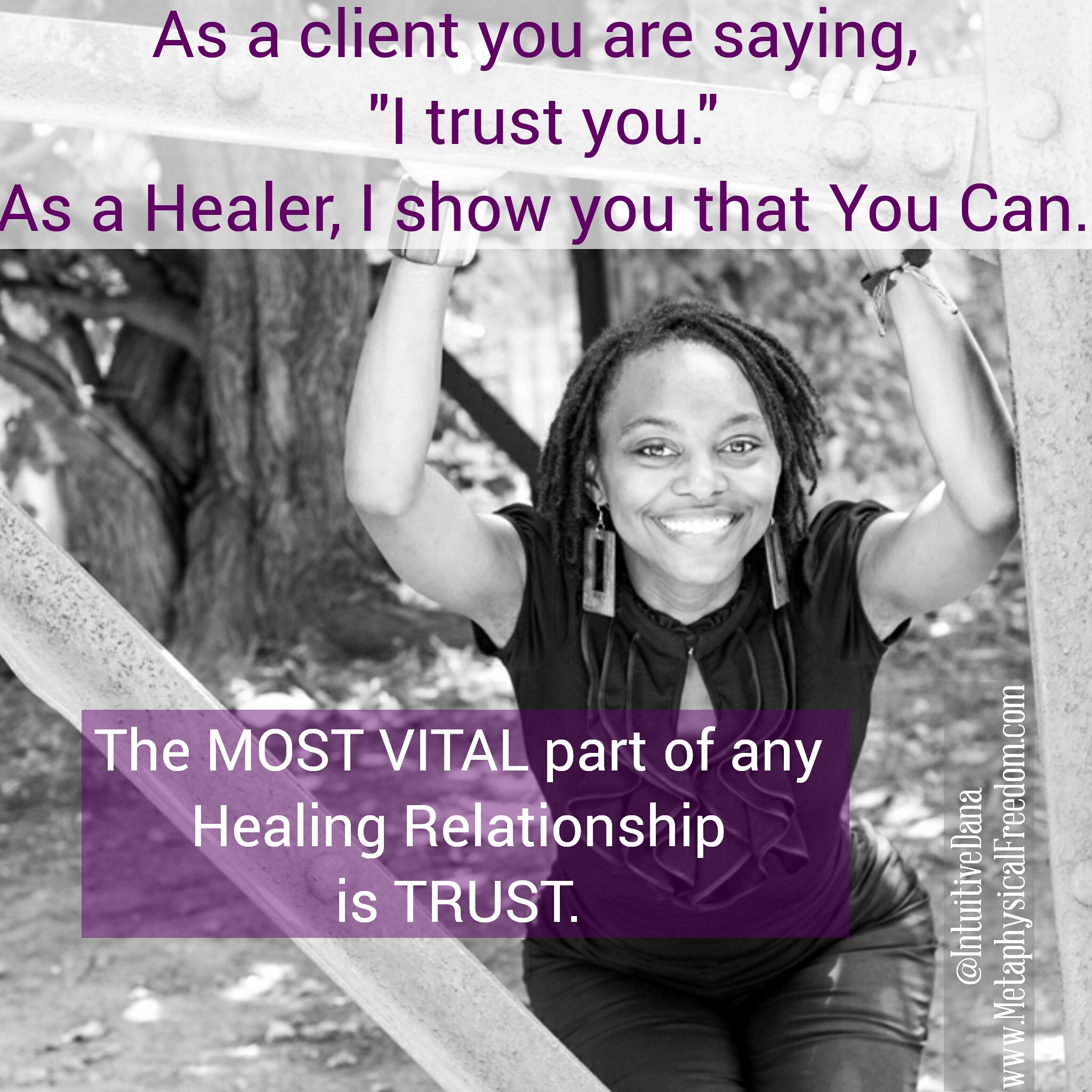
The MOST VITAL part of any healing relationship is TRUST.

Be trustworthy.

Dana

www.MetaphysicalFreedom.com


This is our world.

5F710C32-79C4-4BE3-8875-10287E092369.jpegThis quote speaks volumes.

“This is your world. Shape it or someone else will.” -Gary Lew

This is one of the reasons why I do what I do.

We live in a world where there are several, easily accessible distractions from Self and the transformative power within.

I took a hiatus from blogging and public speaking to detach and recharge from all the energetic “stuff” that has been happening, to re-mind myself of what is true for me, and to stay grounded in this knowledge by seeing through the distractions.

We can become so accustomed to looking at social media, websites, and the news that these things easily become subconscious influencers.

The next time you scroll or flip the channel, think about what you really believe, what you really desire for yourself (and the world), and if the things you are entertaining and doing match those desires. If not, put down the phone (tablet, remote, etc.), wake up from the distractions, and do something different.

Encouraging you to Wake up.

With love,

Dana

http://www.MetaphysicalFreedom.com


3 Comments

Speak from Your Heart (Mindful Communication)

How well do you communicate?

Communication is the most important aspect to any and every relationship. There are different types of communication: Verbal, Nonverbal, and Paraverbal. PLUS, your Energetic Space/Aura/Overall Vibe communicates to others as well.
As a counselor, coach, and speaker, I am constantly communicating. However, I too have made the mistake of misjudging or making assumptions while communicating with others (especially in my personal life). These mistakes can be costly…leading to hurt feelings, lack of depth, and even loss of the relationships.

Maybe you just celebrated Valentine’s Day or an anniversary of some sort. Good job, you’re on the right track! Now, take a step back and see what your partner, friend, coworker, etc. is communicating to you.
We can dive into the different types of communication here:

Nonverbal Communication– Most of our communication is nonverbal, meaning it is not what we say, but everything else. You may have heard this before, but let’s break this down into 2 main parts of nonverbal communication.
1. Proxemics-This is a fancy word that describes how physically close the person is to you, or you to the other person. Typically, the more physical closeness indicates more intimacy (emotional, mental, physical, etc.)
2. Kinesics-This is the fancy word to describe what most people would call body language. This includes movements, gestures, and facial expressions

Paraverbal Communication– Our vocal part of speech, which is our tone, volume, and how fast or slow we talk.
I am often a fast talker. Get me excited, and I talk faster. When I work with the people I serve, I am mindful of this, and I adjust. It makes a world of difference to have an even pace and a calm tone.

The way you say something matters!
Examples: “I didn’t say you were dumb.”– Say this with an even tone. Now try this one, “I didn’t say you were DUMB.” -Emphasize the last word. If you say this out loud, you can see that one of them is not meant to insult, whereas the other may cause conflict.

Of course, the other type of communication that I will address here is…

Verbal Communication: It is the use of words to relay a message or express an idea.
This is where many of us get caught up. In the emotional tornado of a moment, we might forget to pause and use mindful communication instead of emotionally driven words.

Let’s tie this in with conflict resolution. If there is conflict, I ask that you try these two things: Be willing to be wrong. Be willing to apologize.

Just an FYI: Conflict is a natural occurrence. The term has been blown up into great proportions meaning war, fighting, and death, but in reality, conflict is a simple, and organic process. Conflict arises because there are different perspectives within the same situation or regarding the same topic. It’s just that simple. We are individuals, so by default, there will be times when we do not have the same point of view. That is the core of conflict. It has been over-sensationalized through media. (That may be for another blog).
One of the keys to facing conflict and communicating effectively is to use Mindful Communication.

7 Core Guidelines for Mindful Communication:
1. LISTEN (And appear like you are listening)-As a counselor, I have gone through several hours of training to be more present with others as they share with me. We call it active listening. You don’t have to be a therapist to actively listen. The concept is simple: Make eye contact, don’t speak-unless you are affirming or encouraging the other to continue sharing, keep your body open, LISTEN FOR FEELINGS, and SEEK to UNDERSTAND what is being said.

Mindfulness Tip for #1Detach emotionally. Keep in mind that the person you are listening to has something that he or she needs to express. Think to yourself, “Let me be here now. There is something that this person needs to say. I am listening.”

2. REFLECT or RESTATE WHAT YOUR HEARD-Do this BEFORE you share anything about your point of view.
Sometimes this step gets lost. Unfortunately, I have been guilty of this at times.
For example, if your partner says, “I worked really hard to get those things that you wanted taken care of, and you don’t appreciate it.”

Be mindful and attentive to these things about your partner: Tone of voice, Energy level, Facial expressions, and mood. Notice…how close is the person to you physically?

Before you start saying your response, do this:
A) Listen for the feeling being conveyed; B) Make eye contact (non-threatening); then
C) Start with a statement acknowledging what you think you heard. “I hear you saying that you don’t feel appreciated for the hard work you did for me.”

3. CLARIFY: After you restate, check in with the person to make sure you got it right. “Did I hear you correctly?” Truth of the matter is that the person will let you know what’s up and if you got it right. This part is VALUABLE. Clarifying gives you the opportunity to understand the other person. At the very basic level, we communicate in order to express ourselves and to be understood. Understanding someone does not mean that you agree with what is said. It means that you are grasping the view of another’s perspective. Once you have gained clarity, then you can share your point of view from a more accurate perspective because you are identifying the real “issue.”

Mindfulness Tip for #3Be patient and BREATHE. Take a moment to reflect on the person’s underlying message. Do not get swept away in emotions or the person’s emotional response. Ask, with the sole intention to get clear on what the person is saying.

4. OWN YOUR THOUGHTS AND FEELINGS, and share them: Use “I” statements instead of “You did this…”, “You make me…” etc.
Example: “When you say that I do not appreciate you, I feel hurt. I understand what you are feeling and what made you feel that way. I did not see it that way, and I was not aware of your disappointment. I have been working several extra hours each day and I feel more tired than usual.”

Mindfulness Tip for #4Take a few calming, deep breaths and FOCUS ON YOUR HEART chakra. This is the space where you have affinity for others (and self). Speak from this place.

5. CHECK IN AGAIN AND SUMMARIZE: Allow the person to reflect back to you for clarity. (Make sure to use all the other skills mentioned above if needed.)

6. COMPROMISE/RESOLUTION: Remember the main reason for conflict? It is because different perspectives are related to the same situation. Often, there is a common ground or a space for compromise. During this step, request or offer a solution.
Example: “What would you like for me to do differently?”
Apply the skills from steps 1-5 again. Stay on the same topic! Focus only on 1 thing at this time.

Mindfulness tip for #6BREATHE and remember that A SOLUTION IS ALREADY PRESENT

7. RE-ADDRESS the concern later on: This step might not be needed every time. However, if you and the other person aren’t able to address the issue well enough at the time it is presented, set a date to come back to it.  A refreshed point of view about a conflict can make it easier to resolve.

Take these steps into consideration every time you are communicating with someone. This is the practice of mindful communication. It aids in developing healthy communication styles, preventing or resolving conflict, and developing a greater level of understanding.

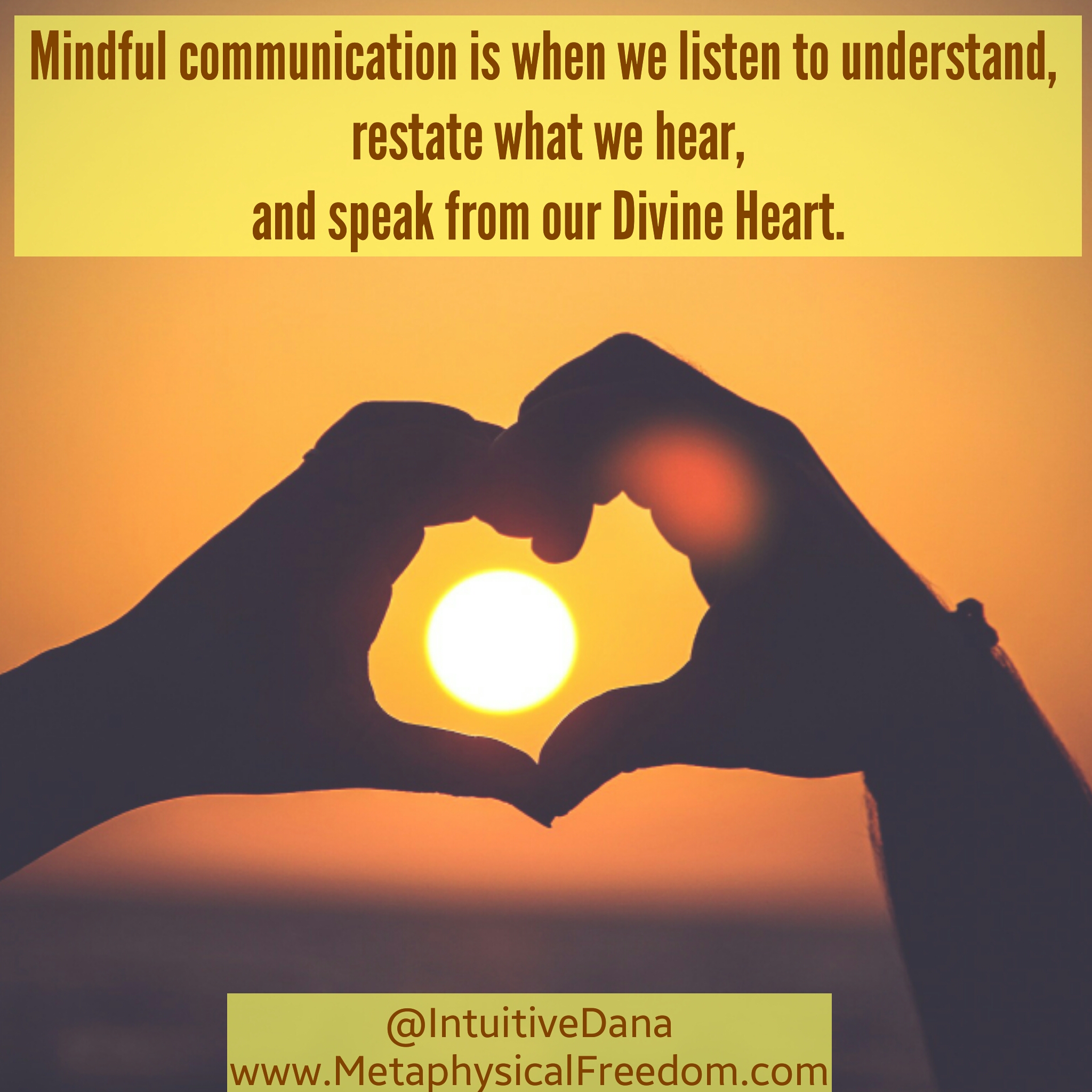
Mindful Communication

Communicated with love,
Dana D. Robinson (Intuitive Dana)


1 Comment

Empty Yourself (to Serve)

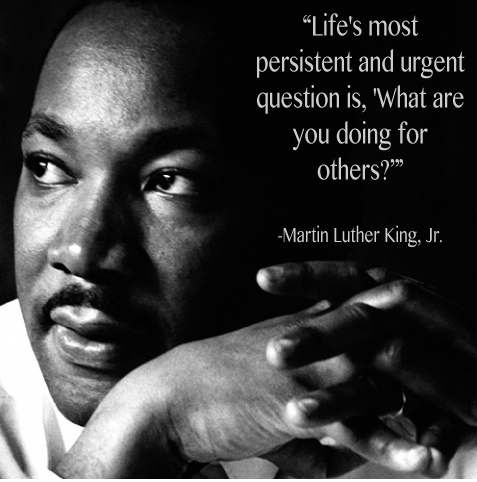
MLK Jr. -Service Quote

My passion is being of service, touching hearts, enlightening minds, guiding, and aiding in the realization of healing and wholeness. There have been several times when I have “missed the mark.” I thought that I was in the flow, being mindful, and in tune with the people that I love as well as the people that I serve.

Thinking this way, I continued in this blissful flow, forgetting an important piece of the puzzle: We all perceive things differently. While I thought I was showing love and being of the utmost service, sometimes the receivers of my actions did not feel the same way. The most sobering experience for me is to find out that I missed an opportunity to be of service because my own point of view misled the way.

Perception is powerful.

One of my favorite quotes says something like this,

“We are the Universe looking at itself from many perspectives.”

Of course! We are individualized expressions of the ONE.

 For those of us who desire to serve others, we must first clear ourselves of our preconceived ideas about serving. We have to know what it is that the receiver truly needs. This may seem so simple, but sometimes it is forgotten. Our perception of another’s needs may be different than what they actually desire. We must meet them where they are, and work with them from there.

 Emptying ourselves allows others’ Lights to guide us. Remember: The Essence of Life within each of us is from the same Source, and healing takes place in many forms.

To be of service, we must first see where we are being led to serve. This way, we are making the most effective impact in the lives of those whom we are meant to bless.

 Empty yourself to serve.


With Humility,
Dana
WordPress: DivineDana; IG/Twitter: @IntuitiveDana
http://www.MetaphysicalFreedom.com


Leave a comment

Time to Change Your Direction

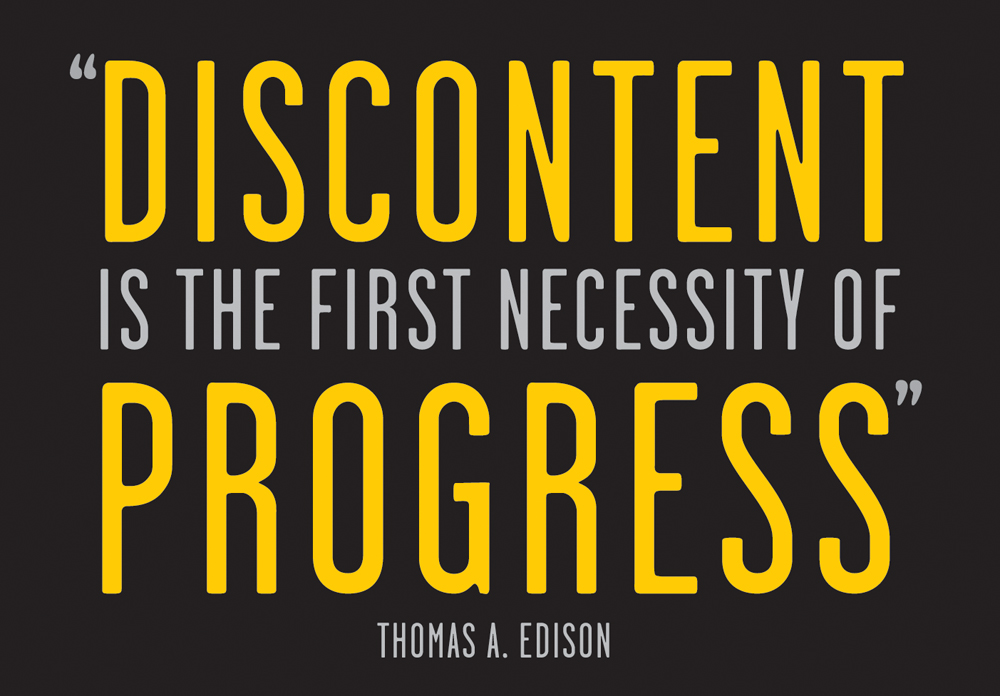
Discontent

When your heart speaks to you, do you listen?
OR
Do you talk yourself out of what is being said to you?

There comes a moment when we know without a doubt that we are being called to do more with our talents, our gifts, and essentially our lives.

Depending on where you are in your journey, some people might call it a mid-life crisis. In some spiritual communities, this process is referred to as Divine Discontent. I like to use this phrase because it is more than just a developmental stage; it is the Universe’s way of getting your attention and growing you into someone even better than you were before.

From personal experiences, and working extensively with several clients, I recognized that this process typically happens in stages.

Here is my summary of the stages related to Divine Discontent:

Stage 1: Misalignment= This is when you begin to feel out of sync with what is going on in your life. The things that you normally do might start to feel monotonous and boring. You might start to feel fleeting senses of disinterest or displeasure for these things. (Not to be mistaken for depression symptoms.)

Stage 2: Denial=The awareness of your misalignment increases, but instead of looking further into the reason behind it, you go against what you are feeling and try to continue in your monotony. You basically talk yourself out of whatever it is that you are feeling…or at least you try… which leads to the next stage.

Stage 3: Detachment = This is when you still are not quite ready to “dig deep” and give anything up or make major changes, so you start to distance yourself emotionally from the things that are causing the discontent. Unfortunately, this state of discontent may also spill over into other things in your life. People might notice and comment on your shift in mood and your distant presence. You can’t hide it anymore.

Stage 4: Epiphany/Climax/Aha Moment =This is when Shift Happens. Your discontent pushes you to the edge of introspection. You look inward, and question what is at the core of your feelings. You realize that you need to make changes, whether small, medium, or major ones. You decide that you are willing to make these changes.

Stage 5: Pursuit = You take action and make the necessary changes so that your discontent decreases. You actively seek guidance, whether it be inward, from mentors, or both. You change your direction and move towards your new goal.

Stage 6: Alignment= You feel more alive and the things you are doing or engaging in feel right. You no longer have that unpleasant sense of monotony or boredom. You are in motion, and it seems like everything and everyone around you are propelling you so that you stay in motion.

Stage 7: Realization= You reach that point of bliss where you know that you are doing what you are meant to do. You have moments where you reflect upon where you were before this stage, and you are grateful that you made the changes. You realize that everything was already worked out for your benefit, and all you had to do was take the first step.

Consider what things (or people) in your life that you feel discontent with.
How long have you allowed this feeling to linger?

It may be time to change your direction.

Change Direction Aug2015

With Insightful Love,
Dana (Intuitive Dana)
http://www.metaphysicalfreedom.com
Interested in a personal session?
Set up an appointment here.